Sector
Two-way radios for schools, colleges and universities
Schools use radios to reach staff anywhere on site within seconds: the playground, the gate, the far field, reception, and every radio at once in a lockdown. We hire, lease and sell school radios, with the Ofcom licence handled for you.
Primary schools usually take a few simple radios, such as the Hytera BD505 or the FW-300, for the playground, the office and the gate. Secondary schools, colleges and university campuses need the range of a licensed fleet, with separate channels for the site team and senior leadership and an emergency all-call. Large or split sites add a repeater.
Every radio arrives programmed and licensed, so there is nothing for the school to set up. Hire by the term, lease over three or five years so the cost sits in the operating budget, or buy outright.
Typical accessories
- D-shape earpieces
- Discreet earpieces for lockdowns and safeguarding
- Desktop multi-chargers for the office
- Belt clips
- Carry cases for trips
What matters in schools, colleges and universities
What the radios need to do, and how we set them up.
Lockdown and emergencies
One all-call channel reaches every radio. On digital radios, the emergency button alerts the office with that radio's ID.
Non-technical users
Our simpler radios have a channel knob, a volume knob and a talk button, and arrive programmed.
Large sites and playing fields
Licensed radios cover a large secondary site and its fields. A repeater covers a university campus or a split site.
Safeguarding and trips
Earpieces keep sensitive calls away from pupils. RevoNet push-to-talk radios work over the mobile network, so trip leaders can stay in touch with school from a coach or a venue.
Guide
Choosing radios for a school
Licence-free walkie-talkies or licensed radios?
Licence-free radios, such as the Hytera AP585 that many schools use, are limited by law to half a watt and share 16 channels with the public. In a small single-storey primary they can be enough.
In a building with thick walls, on a split site or across a secondary school's playing fields, staff at the edges start to drop out, and anyone nearby with a shop-bought walkie-talkie can listen in. Licensed radios run at higher power on business frequencies, so they reach further and get through walls better.
We handle the licence. Hired radios are covered by ours, and for a lease or purchase we apply for one in the school's name. Ofcom charges £75 for five years.
Primary schools
Most primaries want a radio in the office, one for each member of staff on the playground at break and lunch, and one for the site manager. Simple radios with no screen and a channel knob work best, because they are passed from person to person through the day.
One channel is usually enough. Add a second if the site team or the senior leadership team want to talk without the whole playground hearing.
Secondary schools and academies
Secondaries usually run several channels: senior leadership and on-call, site and facilities, reception and the office, and first aid. Staff on the gates at the start and end of the day, and anyone out on the fields, need the range of a licensed radio.
On a site with many separate buildings, a repeater makes sure every corner is covered. A multi-academy trust can standardise on one radio and one channel plan across its schools, so staff who move between sites use the same radio and channels at each school.
Colleges and universities
Campus security, estates, porters and events teams use radios all day. A repeater on a tall building usually covers a campus, and we add channels for open days, graduation and freshers' week.
For a university spread across several campuses or towns, RevoNet push-to-talk works over the mobile network, so security on one campus can talk to another without extra licences or repeaters.
Off site and at home: RevoNet
Handheld radios have a limited range. RevoNet push-to-talk radios work over the mobile network, so they keep working wherever there is signal: on a school trip, on the coach, at an away fixture or a sports day held off site, and between staff in different buildings or towns.
Staff do not need a radio to join in. Someone working from home or at another site can talk to the group from a PC through RevoNet Control in a web browser, or from an Android phone with the RevoNet app.
The school runs it. Your administrator adds and removes staff, sets up talkgroups for each trip or team, sees where radios were last seen on a map, and locks out a lost radio, all from a browser. RevoNet needs no Ofcom licence.
Lockdowns and emergencies
A lockdown plan needs a way to tell every member of staff at once, including people who are outside, on a break or away from a phone. We set up an all-call so the office can speak to every radio at the same time.
On digital radios, the emergency button alerts the office and shows which radio pressed it. Earpieces keep what is said away from pupils.
Martyn's Law and schools
Martyn's Law is the Terrorism (Protection of Premises) Act 2025. It applies to a school or college where 200 or more people, counting staff and learners, can reasonably be expected on the premises at the same time. Childcare, primary, secondary and further education premises are always in the standard tier, even at 800 or more. The government expects the Act to come into force in spring 2027.
A school in scope must notify the Security Industry Authority and have procedures for evacuation, invacuation, lockdown and communication, so far as is reasonably practicable. The Act does not require radios or any other equipment. Lockdown and communication are the procedures where schools commonly use radios, because one call reaches every member of staff holding one.
Safeguarding and privacy
Digital radios can be encrypted, so conversations cannot be picked up on a scanner or a cheap walkie-talkie outside the gates. Earpieces keep names and incidents away from pupils and parents in the playground.
Trips, sports days and events
Residentials, sports days, open evenings and the summer fair all need more radios than a normal day. You can hire extra radios for the event, programmed to work with the ones you already have where they are compatible, so everyone is on the same channels. For trips and away fixtures too far from school for ordinary radios, RevoNet keeps the trip in touch with the office.
Paying for them
Schools usually lease so the cost sits in the operating budget, hire by the term, or buy outright from capital funding. We can quote in whatever format your business manager, governors or trust need, and invoice the school or the trust directly.
Recommended radios
Radios we recommend for schools, colleges and universities
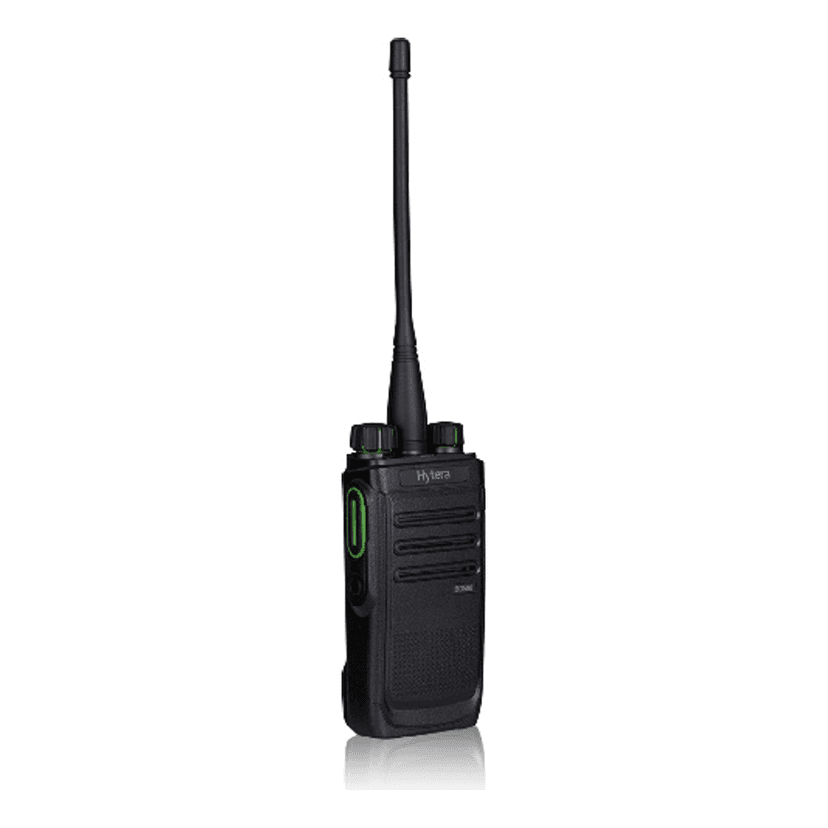
Licensed digital DMR
Hytera BD505
Hytera's entry-level digital handheld, small and light with no screen.
- UHF 400–470 MHz (VHF 136–174 MHz available)
- 48 channels, 3 zones, 16-position knob
- 4 W / 1 W UHF (5 W / 1 W VHF)
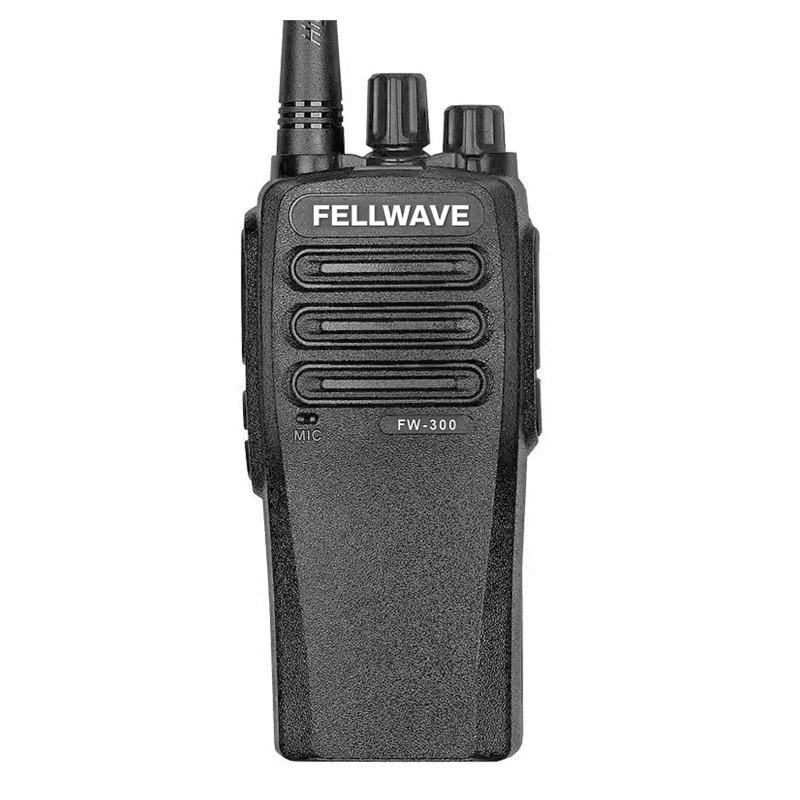
Licensed analogue
Fellwave FW-300
Our standard hire radio: a 5 W analogue UHF handheld, rated IP54, with a channel knob, a volume knob and a talk button.
- UHF 400–470 MHz
- 5 W
- IP54, splash and dust resistant
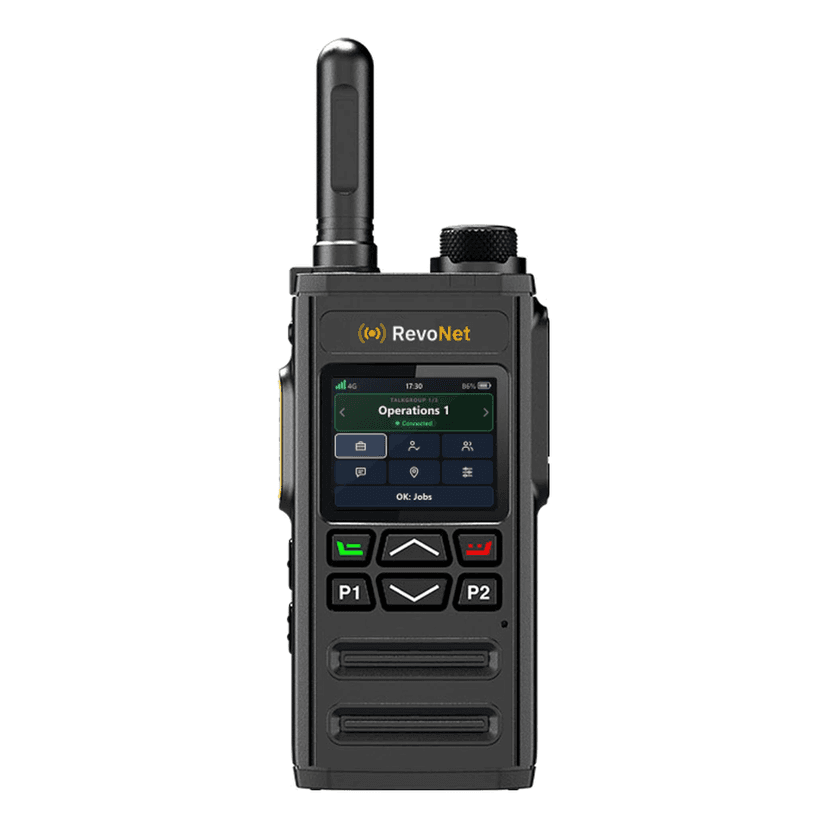
Nationwide PoC / LTE
RevoNet Handheld
Push-to-talk over the UK mobile networks, with no range limit and no Ofcom licence.
- UK mobile networks through a managed multi-network RevoSIM; Wi-Fi where available
- Anywhere in the UK with mobile coverage
- Side push-to-talk key, top SOS button, talkgroup selection
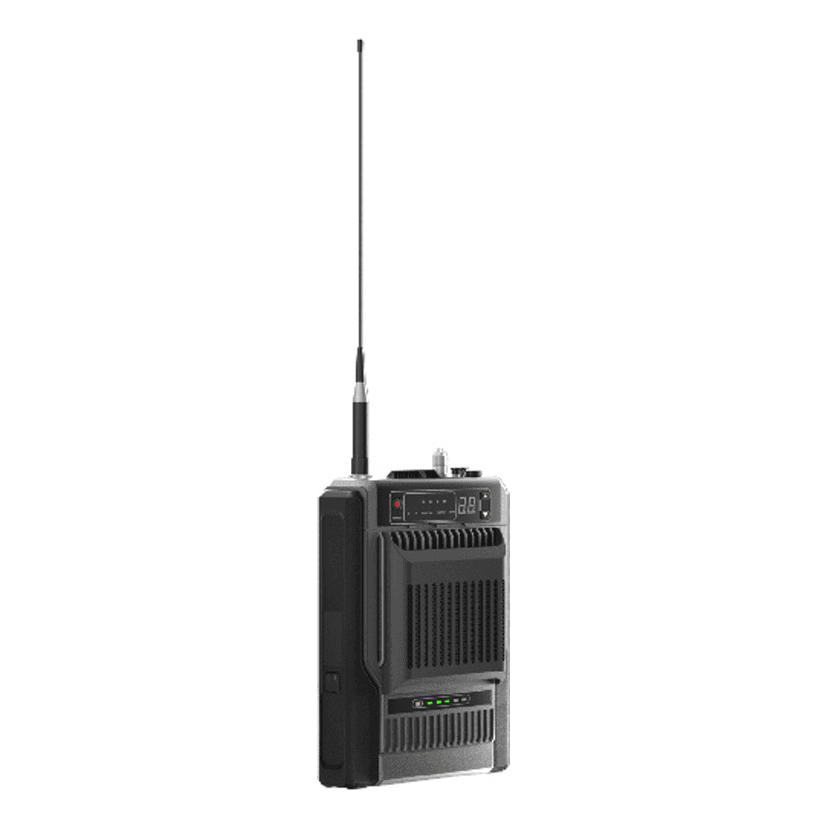
Repeaters
Hytera HR655
A compact 2 kg repeater with a built-in duplexer and battery backup.
- 25 W (IP54 indoor version) or 10 W (IP67 outdoor version)
- UHF 400–470 MHz or VHF 137–174 MHz
- DMR Tier II + analogue FM
Schools, colleges and universities: common questions
Does Martyn's Law mean a school has to buy two-way radios?
No. The Act does not require radios or any other specific equipment. It does require procedures for evacuation, invacuation, lockdown and communication, and the guidance says good communication is what gets the others started quickly. It applies to schools that can expect 200 or more staff and learners on the premises at the same time. A two-way radio lets the office speak to every member of staff across the site at once and lets them answer, which is why schools commonly use radios in their lockdown and communication procedures.
What is the best two-way radio for a school?
There is no single answer. Primaries usually do best with simple radios with no screen. Secondaries and colleges need licensed radios with the range to cover the fields, and supervisors often want a model with a screen. Tell us about the site and we will suggest radios to suit it.
Which radio does a primary school need?
Simple radios with a channel knob and no screen, such as the FW-300 or Hytera BD505, for the office, playground staff and the site manager. We programme them before delivery so there is nothing to set up.
Do schools need a licence for two-way radios?
Not for licence-free walkie-talkies. Licensed radios need an Ofcom licence. Hired radios are covered by ours. If you lease or buy, we apply for a Simple UK Light licence in the school's name, which Ofcom charges £75 for five years.
Are shop-bought walkie-talkies good enough for a school?
In a small single building they can be. They are limited to half a watt, share channels with the public and struggle through walls. Schools often move to licensed radios when staff start dropping out at the edge of the site.
Can pupils or parents hear our radios?
Not if you use digital radios with encryption turned on. Earpieces also stop anyone nearby hearing what is said.
Will new radios work with the ones we already have?
Usually. Tell us the make and model. Most school radios are analogue or DMR digital, and we can programme ours to match your channels.
Can staff on a school trip stay in touch with the school?
Yes, with RevoNet. It works over the mobile network rather than radio range, so a trip leader on a coach or at a venue miles away can talk to the office at the press of a button, and staff back at school can join from a PC or phone.
Can we hire radios just for a residential trip?
Yes. A few radios with a charger and a case can go out for the week, delivered to the school before you leave.
Is there a discount for schools?
We offer education rates on lease and hire. PTAs and charitable trusts get our charity discount. Ask us.
Enquire
We quote for schools, colleges and universities within one working day.
To put a kit list together we need the number of radios, the dates, the location and what the radios are for.
- Email[email protected]
- Phone0333 340 9646
- WhatsAppMessage us on WhatsApp
- Monday to Friday, 08:00–18:00. Out-of-hours support for live events by arrangement.
Want a rough price first?
The quote calculator gives an estimate from the number of radios and the length of hire.
Get a price in 20 seconds